
null
Worldwide delivery Free UK & Ireland delivery Free EU delivery over £50 1,100+ Reviews

Parallel Pliers

(Showing 12 of 83)

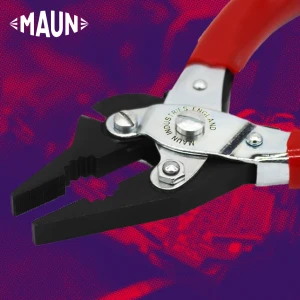
Maun parallel pliers, also called parallel jaw or parallel-action pliers, are UK-made pliers whose jaws stay parallel as they close, used by jewellers, model makers, engineers, electricians and DIYers.

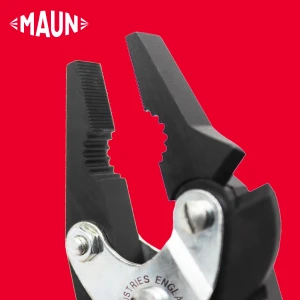
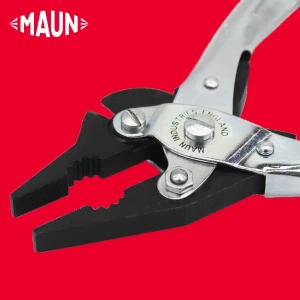
On parallel pliers, the jaws move in parallel throughout use, so they grip along the whole length of the jaw instead of at one point, as pivot pliers do. You get a firmer grip with less effort, and less chance of the workpiece slipping or being marked. The steel jaws on Maun’s standard range are case hardened to HRC 57 for durability.

Maun makes parallel pliers with flat nose, snipe nose, long nose, thin, round, half round, V-notch and plastic or nylon jaws, along with clamping and customisable parallel pliers, and side cutter and combination parallel pliers that add an integrated wire cutter. They come in 125, 140, 160 and 200 mm lengths, measured from the tip of the jaws to the end of the handles, and the combination pliers come in 150 and 180 mm. The shorter pliers suit fine work and smaller hands, and the longer ones suit larger workpieces and give you more leverage.

Flat nose, snipe nose and side cutter parallel pliers come with a choice of smooth jaws, which prevent damage to soft or finished metal, or serrated jaws, which give the most grip. Handles come plain zinc-plated, with soft plastic comfort grips, with a return spring, or with both.

What are parallel pliers used for?

Maun parallel pliers are used to grip, hold, bend and straighten wire, flat strips of metal, sheet metal and small parts without slipping or marking them, because parallel jaws grip securely along their whole length and there are no pinch points. Jewellers use them to straighten wire and close jump rings, model makers to fold photo-etched brass, fitters to hold nuts and small fittings, and electricians to straighten and hold wire.

JobWhat you holdBest Maun parallel plierWhy it suits the job
Jewellery making Silver, gold and gold-filled wire, sheet metal and findings Maun Smooth Jaws Flat Nose Parallel Plier 125 mm (4870-125) Smooth parallel jaws grip soft silver and gold along a 30 mm useable jaw without marking it
Jump rings and chain Jump rings, clasps and ear wires Maun Snipe Nose Smooth Jaws Parallel Plier 125 mm (4340-125) Tapered jaws narrow to a 2.0 x 1.8 mm tip and grip the full width of the ring, so it closes without the V-shaped distortion pivot pliers cause
Loops and rings Wire loops of a set size, ring shanks and collets Maun Fine Nose Round Jaws Parallel Plier Comfort Grips 125 mm (4776-125), or the Maun Half Round And Flat Jaws Parallel Plier 140 mm (4876-140) for ring bending Round jaws form loops from 1.0 to 4.0 mm; a half round jaw grips the full width of a ring shank, so the middle doesn’t bow as you bend it
Coloured, plated or polished work Coloured and plated craft wire, polished parts and fired silver clay Maun Soft Plastic Jaws Flat Nose Parallel Plier 125 mm (4873-125) Soft plastic inserts grip the workpiece without marking the finish
Model railways and model making Photo-etched brass, detail parts and handrails Maun Snipe Nose Smooth Jaws Parallel Plier 125 mm (4340-125) for tight places, or the Maun Smooth Jaws Flat Nose Parallel Plier 125 mm (4870-125) for folding etched brass The 2.0 x 1.8 mm tip fits inside a model to place detail parts; smooth flat jaws grip photo-etched brass along the fold line, so it bends cleanly without marks
Small nuts and fastenings Hex and square nuts, studs and small bolts Maun Flat Nose Parallel Plier 160 mm (4860-160) Serrated parallel jaws close flat onto two opposite sides of a nut, up to the 14 mm jaw opening, and grip the full face of each side rather than the corners
Fastenings in tight spaces Small fastenings and components in back boxes, engine bays and consumer units Maun Long Nose Parallel Plier 160 mm (4912-160) Long tapered jaws give good visibility and access in tight spaces, and grip a component firmly along a 50 mm useable jaw down to a 3 mm tip
Electrical work on isolated circuits Wire to straighten, cleats and earth tags Maun Flat Nose Parallel Plier Comfort Grips 160 mm (4866-160) The V-slot feeds and holds wire and rod securely along jaw length, wire can be threaded down the throat of the plier to grip it at any point, and comfort grips stay comfortable over long periods
Live electrical work Live or potentially live conductors Maun 1000V Insulated Side Cutter Parallel Plier For Hard Wire 160 mm (7104-160) Polymer-encased handles certified to IEC 60900:2018 for use up to 1000V AC and 1500V DC, with an integrated cutter, so you can grip and cut wire without swapping tools
Finished, plated and chrome parts Plated fittings, polished and soft parts, and sheet metal Maun Smooth Jaws Flat Nose Parallel Plier Comfort Grips 160 mm (4877-160), or the 200 mm with Return Spring (4871-200) for larger parts Smooth jaws grip along 34 mm (160 mm) or 40 mm (200 mm), so larger finished parts stay unmarked
Racquet stringing The string, to pull tie-off knots tight Maun Flat Nose Parallel Plier 125 mm (4860-125) Parallel jaws grip the string along their whole length, so a tie-off knot pulls tight without the string slipping, and the 6.4 mm wide jaws are narrow enough to fit tight spots on the frame
Leather sewing The needle, to pull it through the leather Maun Smooth Jaws Flat Nose Parallel Pliers Return Spring Comfort Grips 125 mm (4887-125) Smooth parallel jaws grip the needle firmly without marking it, so you can pull it through the leather, and the return spring opens the jaws between stitches
Gripping and cutting jewellery wire Soft jewellery wire up to 1.6 mm gilding wire Maun Smooth Jaws Semi-Flush Cut Side Cutter Parallel Plier for Soft Wire 125 mm (4980-125) Smooth parallel jaws hold soft, precious metal wire without marking it, and the semi-flush side cutter trims the wire end cleanly with minimal pinch, so you switch between gripping and cutting without changing tools
Gripping and cutting in recesses Wire, cable ties and springs in deep recesses Maun Long Nose Side Cutter Parallel Plier 200 mm (4910-200) A 70 mm useable jaw grips components deep in a recess, and the integrated cutter cuts piano wire up to 2.0 mm and hard wire up to 2.5 mm, so you can grip and cut without swapping tools
Holding work hands-free Pendants, beads and fine wire while you work on them Maun Clamping Parallel Plier With Plastic Jaw Inserts 160 mm (4802-160) A locking screw holds the workpiece in place, leaving your hands free, and plastic-covered jaws protect it
A jaw shape nobody sells A prototype jaw profile or a production tool Maun Customisable Soft Jaws Parallel Plier 160 mm (4864-160-99) Soft metal jaw blanks on unpeened screws come off easily, so you can machine your own profile and send us the design for bulk production

Which type of parallel pliers do you need?

Maun parallel pliers compared

TypeJawsOverall lengthsJaw openingUseable jawBest for
Flat nose, serrated (4860-160) Serrated, with V-slot 125, 140, 160, 200 mm 10 to 17 mm 28 to 40 mm Fastenings, wire and flat strips of metal; electrical and maintenance work
Flat nose, smooth (4870-125) Smooth 125, 140, 160, 200 mm 11 to 17 mm 28 to 40 mm Jewellery; finished, plated and soft parts
Snipe nose (4340-125, 4330-125) Smooth or serrated, 2.0 x 1.8 mm tip 125 mm 11 mm 30 mm Jump rings, model detail and small fastenings in tight spaces
Thin jaws (4880-160) Smooth, 3 mm wide 160 mm 13 mm 30 mm Narrow pieces in confined spaces, for a larger hand
Long nose (4912-160, 4912-200) Serrated, tapering to a 3 or 4 mm tip 160, 200 mm 10 or 13 mm 50 or 70 mm Back boxes, engine bays and consumer units
Round, half round, round and flat (4776-125, 4772, 4710-125) Smooth, round or half round 125, 140 mm 8 to 11 mm 20 to 28 mm Loops from 1.0 mm, ring shanks and collets
V notch and 2 step (4760-125, 4750-125) V notches for 0.4 to 6.0 mm wire; stepped 125, 140 mm 10 to 11 mm 22 to 30 mm Holding round wire to file or trim it; tight and soft curves
Plastic and nylon (4873-125, 4874, 4855-125) Soft plastic, nylon or hard nylon inserts 125, 140 mm 9 to 11 mm 20 to 24 mm Coloured, plated and polished work
Clamping (4802-160) Plastic-covered, with locking screw 160 mm 12 mm 20 mm Holding pendants, beads and fine wire hands-free
Customisable (4864-160-99, 4864-200-99) Soft metal jaws to machine and harden 160, 200 mm 14 or 17 mm 46 or 40 mm Your own jaw profile, from prototype to production
Side cutter (4910-160, 7104-200, 4980-125) Serrated or smooth, with an integrated cutter 125, 140, 160, 200 mm 10 to 17 mm 28 to 70 mm Gripping and cutting wire with one tool; live work with the 1000V versions
Combination (4990-150, 4990-180) Serrated, with pipe grip and integrated cutter 150, 180 mm 10 or 15 mm 40 or 42 mm Holding pipe, rod or tube and cutting wire

Smooth or serrated jaws?

Choose smooth jaws for soft, precious, plated or finished metal, and serrated jaws for grip on fastenings, wire and rod. Maun smooth jaw parallel pliers hold silver, gold and plated parts without marking them, which is why jewellers and model makers use them; the trade-off is less grip on rod and harder materials. Serrated jaws give a vice-like grip on square and hexagonal fastenings but will mark soft or finished metal. If even smooth steel would mark the workpiece, such as coloured wire or a polished finish, choose plastic or nylon jaws: nylon is firmer, so you feel more of the workpiece through the pliers, but neither is for heavy force or hot work.

Which size of parallel pliers: 125, 140, 160 or 200 mm?

Parallel pliers are sized by overall length, from the tip of the jaws to the end of the handles, so choose by the size of the workpiece and the size of your hand. The 125 mm and 140 mm Maun parallel pliers are for fine work such as jewellery, model making and electronics, and they suit smaller hands: one buyer with small hands thought our 125 mm pliers looked too chunky in the photos, but found them comfortable to use. The 160 mm and 200 mm pliers open wider and have longer jaws, so they hold larger parts and thicker wire and rod, and they grip more of a sheet, so you can make a longer bend in one go. Their longer handles also give you more leverage on tougher materials. On the flat nose pliers, the 160 mm opens to 14 mm with 34 mm of useable jaw, and the 200 mm opens to 17 mm with 40 mm. If you have a larger hand but need fine jaws, the Thin Jaws Parallel Plier 160 mm (4880-160) is designed for a larger hand than our snipe nose pliers, with 3 mm wide jaws.

Return spring, comfort grips or plain handles?

Choose a return spring for repetitive work, comfort grips for long sessions, and plain handles for everything else. A return spring opens the jaws between grips, so you don’t have to prise the handles apart, which makes for easier handling of parts on repetitive fitting work. Comfort grips put soft plastic grips over the zinc-plated handles for added comfort, so the pliers stay comfortable to use over long periods, such as a day at the jewellery bench. Plain zinc-plated handles are slimmer, with detailing for added grip, and suit shorter jobs. Many types come with both a return spring and comfort grips.

Parallel pliers or a pliers wrench?

Parallel pliers and a pliers wrench both have jaws that stay parallel, but they do different jobs. With fixed jaws on a box joint, parallel pliers let you hold, bend and straighten a workpiece without setting the jaws first. Their serrated jaws give a vice-like grip on square and hexagonal fastenings, including worn or rounded ones: the jaws close flat onto two opposite sides of the nut and grip along the full face of each, where pivot pliers press on the corners and can slip off or round off soft or plated fastenings. A pliers wrench is an adjustable tool with smooth parallel jaws that you set to the width of a nut or fitting, then turn like a spanner. Our flat nose parallel pliers grip fastenings up to their jaw opening, 14 mm on the 160 mm and 17 mm on the 200 mm; for wider fastenings, use an adjustable wrench. To hold pipe, rod or tube, the Maun combination parallel pliers have a serrated pipe grip next to the jaws.

How are parallel pliers different from normal pliers?

Parallel pliers use a box joint, so the jaws stay parallel from fully open to fully closed and meet the workpiece as a flat surface; normal pliers pivot like scissors, so the jaws close in a V and grip at one point. The flat contact means no pinch points and an even grip with less effort, and parallel jaws won’t push the workpiece out of the jaws the way scissor-action pliers can. Our guide What are parallel pliers and how do they work? shows the mechanism. For jewellery making, parallel-action pliers are the better choice for almost every task, because they hold soft silver and gold securely without denting it; parallel pliers vs pivot pliers for jewellery making compares them task by task.

Are parallel pliers hard to use or too bulky?

No. You hold and close parallel pliers the same way as ordinary pliers; only the jaw action is different, and most people stop noticing it within a few minutes. Because the jaws close the same way every time, wherever the workpiece sits, parallel pliers are easier to learn on, and two people get the same bend from the same action. Nor are they too bulky for fine work: Maun’s 125 mm mini parallel pliers weigh under 100 g, and the box joint adds only a marginal amount of weight over ordinary pliers. You rarely need the jaws fully open either, because they grip along their whole length rather than at one point near the pivot. Over a whole job, parallel pliers save you time, because the even grip cuts out the re-grips and the reworking of marked pieces that pivot pliers cause. Our guide Are parallel pliers hard to use? goes through each point.

Are parallel pliers worth it?

Yes, parallel pliers are worth it if you want a workpiece held without slipping or marking, whether you use them every day or now and then. They cost more than pivot pliers, and Maun parallel pliers are made to last: the steel jaws are case hardened to HRC 57, and a master racquet technician has used our 125 mm flat nose parallel pliers for over 30 years. A railway modeller summed them up as expensive, but you get what you pay for. For jewellery, buy the parallel-action version of each shape you need: you’ll mark less metal and waste less silver.

Can you use parallel pliers on live wires?

Of Maun’s parallel pliers, only the 1000V Insulated Side Cutter Parallel Pliers (7104-160 and 7104-200) are made for live work: they are certified to IEC 60900:2018, the international standard for hand tools used on live work, for use up to 1000V AC and 1500V DC, with polymer-encased handles and hand-stops. Our other parallel pliers carry no insulation rating, whatever their grips look like, and must not be used on live electrical wire. An insulated tool is a safeguard, not a substitute for safe isolation: isolate the circuit and prove it dead wherever you can.

FAQs

Are parallel jaw pliers the same as parallel action pliers?

Yes. Parallel pliers, parallel jaw pliers and parallel action pliers are the same tool: pliers whose jaws stay parallel as they close. Maun sells them as parallel pliers.

What are the best pliers for model railways?

The best pliers for model railways are fine parallel pliers that grip without marking. The Maun Snipe Nose Smooth Jaws Parallel Plier 125 mm (4340-125) is for very precise and detailed work, the serrated version (4330-125) for getting into tight places, and the Smooth Jaws Flat Nose Parallel Plier 125 mm (4870-125) for folding flanges on photo-etched brass. For painted or plated parts, the Soft Plastic Jaws Flat Nose Parallel Plier 125 mm (4873-125) leaves no marks.

Are snipe nose pliers the same as chain nose pliers?

Yes. Snipe nose pliers are also known as chain nose pliers: tapered jaws for close work, jump rings and small fastenings. Maun snipe nose parallel pliers taper to a 2.0 x 1.8 mm tip, and because the jaws close parallel, the tips meet squarely.

Will parallel pliers mark metal?

No, not with smooth jaws. Smooth jaws won’t mark silver or gold, because the jaws meet the workpiece flat with no pinch points; serrated jaws will mark soft or finished metal. For coloured, plated or polished work, plastic or nylon jaws leave no marks.

Can parallel pliers grip nuts?

Yes. Serrated parallel pliers give a vice-like grip on square and hexagonal fastenings, because the jaws close flat onto two sides of the nut instead of pressing on its corners. Maun flat nose parallel pliers grip nuts up to their jaw opening, 14 mm on the 160 mm and 17 mm on the 200 mm, so they suit small nuts on cars and small bolts where a spanner won’t fit.

Can you get parallel pliers that lock?

Yes. The Maun Clamping Parallel Plier With Plastic Jaw Inserts 160 mm (4802-160) has a locking screw that holds the workpiece in place, leaving your hands free.

What warranty do Maun parallel pliers have?

Maun parallel pliers come with a 12-month warranty, extended to 2 years when you register your tool.

UK-made by Maun

Maun has made parallel-action pliers in Nottinghamshire since 1944 and has been ISO 9001 certified for more than 30 years. Maun parallel pliers are UK-made: we harden, assemble and test them in our own factory, and our side cutter parallel pliers meet BS 3087-7:1996, ISO 5747:1995, the British and international standards for lever-assisted side cutting pliers. Maun’s official website, maunindustries.com, sells the full range of Maun parallel pliers direct from the manufacturer.

More on parallel pliers

Guides:

Similar products:

Show 12 24 36 48 96 All