


How to hold chrome, plated and polished parts without marking them
Published by Rebekah Jackson, Digital Marketing Executive on 26th Nov 2026
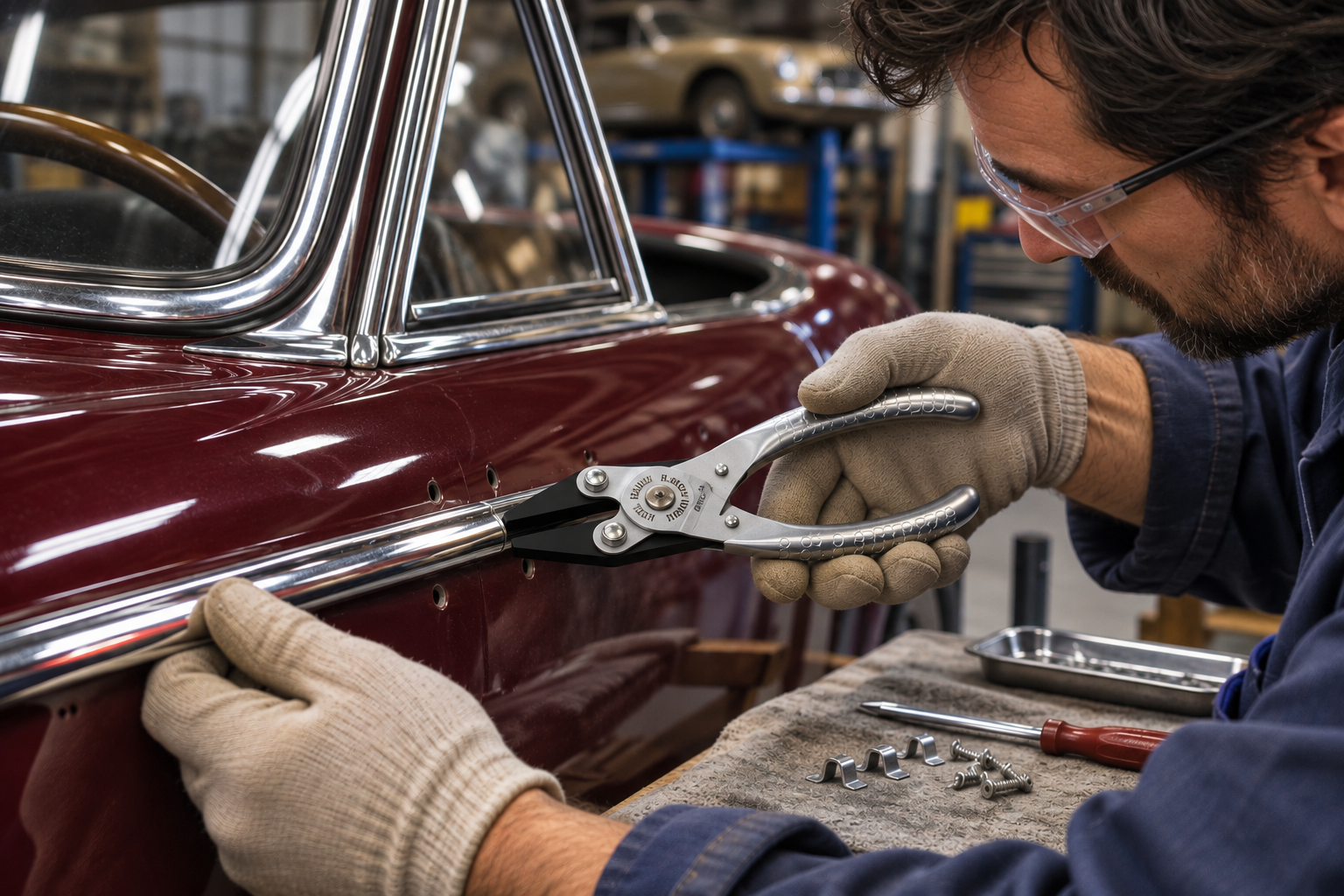
You've spent hours polishing a chrome fitting or carefully finishing a model component. Then one squeeze with the wrong pliers leaves a mark across the surface. Once a plier damages a plated finish, polishing may not remove the mark. If the coating is broken, the exposed metal may also become vulnerable to corrosion.
To reduce the risk of marking, choose jaws that suit the finish and spread the gripping pressure evenly. Soft plastic or nylon jaws help protect delicate surfaces, while smooth parallel steel jaws offer a firmer grip where the finish allows. Whatever you use, keep the jaws clean and apply only as much pressure as necessary. Here's how the usual options compare.
Why Pliers Mark a Finish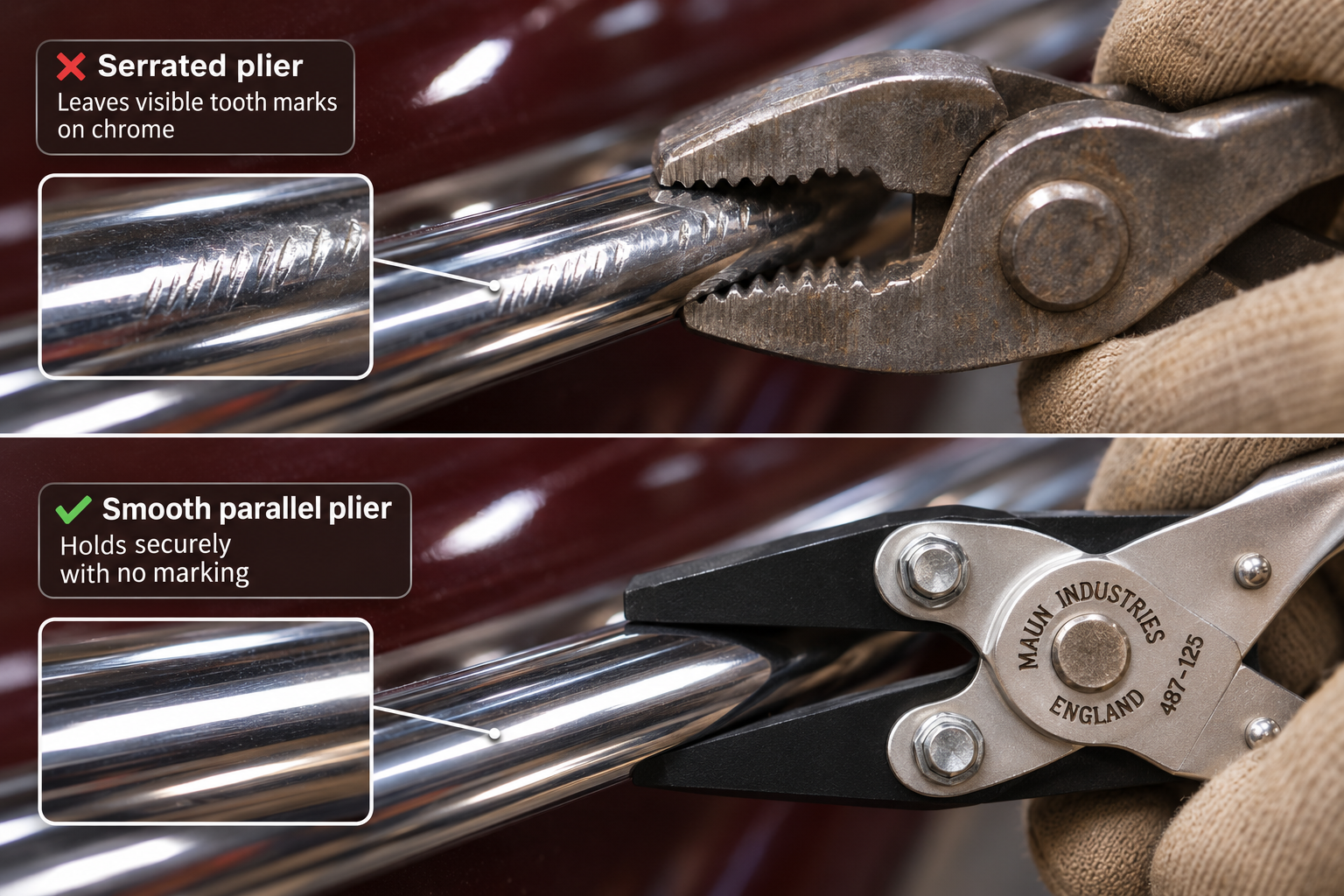
Pliers mark a finish in three ways, and most damage comes from more than one at once:
• Serrated jaws can leave tooth marks in the finish. Combination pliers and standard flat nose pliers have teeth to bite on bare steel. On chrome, plating or anodising, those marks can go through the coating.
• A single pivot can concentrate pressure. The jaws of an ordinary plier close at an angle, so they first touch the part at a single point, often the point closest to the pivot, not across the jaw face. Concentrating the force in one small area increases the risk of marking, and the part can rock or twist as the jaws close.
• Grit on the jaw can scratch like sandpaper. A speck of swarf or polishing compound trapped between a jaw and a polished surface can scratch the finish when the part moves.
On coloured, enamelled or plated wire, even a smooth steel jaw can burnish a bright line where it closed. On an enamelled or anodised finish the coating can chip, and polishing may not remove that damage.
Your Options Compared
|
Tool or method |
How it grips |
Typical risk to the finish |
Best for |
|
Serrated jaws (combination, standard flat or snipe nose) |
Teeth bite into the surface |
High |
Bare metal only |
|
Tape or a cloth wrapped round serrated jaws |
Teeth padded by a thin layer |
Medium: the layer can slip, tear or leave adhesive |
A one-off emergency |
|
Slip-on soft jaw covers on ordinary pliers |
Soft cover, but the jaws still close at an angle |
Low to medium: the cover can shift, and pressure is concentrated at a single point |
Occasional light holding |
|
Pliers with fixed plastic or nylon jaws on a single pivot |
Soft contact, closing at an angle |
Low to medium: soft, but grip concentrates at a single point and the part can twist |
Small, light parts |
|
Smooth jaw pliers on a single pivot |
No teeth, closing at an angle |
Medium: no tooth marks, but the contact point can press a line into the finish |
Light holding on harder finishes |
|
Parallel pliers with plastic or nylon jaws |
Soft contact, jaws close parallel |
Low |
Coloured, plated and polished parts that need a controlled hold in the hand |
|
Parallel pliers with smooth steel jaws |
No teeth, jaws close parallel |
Low to medium, depending on the finish and the pressure |
Chrome fittings and trim that need a firmer hold, where suitable for the finish |
|
Vice with soft jaw liners |
Clamps the part still |
Low, with clean liners and moderate pressure |
Holding a part still while you polish, drill or file it |
|
Correct spanner or socket |
Fits the flats of a fastening |
Low, when it's the exact size |
Tightening or undoing chromed nuts and bolts |
The ratings are a general guide based on how each tool grips, not test results: the finish, the shape of the part and the pressure you apply all change the risk. Two things matter most: what touches the part, and how the pressure is spread. Tape and slip-on covers change the first but not the second. Parallel jaws change the second, and soft jaw inserts change both.
When Parallel Pliers Are the Right Choice
Match the jaw to the finish and to the force the job needs. Softer inserts offer more protection, but may provide less grip.
|
Finish or job |
Jaw to use |
Why |
|
Coloured, enamelled or anodised craft wire; painted model parts |
Soft plastic jaws (polyurethane inserts) |
The softest insert, so it reduces the risk of lifting colour or paint |
|
Gold-filled, gold-plated and silver-plated wire and findings |
Nylon jaws |
Firmer than soft plastic, and keeps metal off the finish |
|
Small plated parts and fine detail work |
Hard nylon fine tip jaws |
The firmest insert, with a fine tip for small work |
|
Chromed or plated fittings and trim that need a firm hold; flattening plated strip or sheet |
Smooth steel jaws |
No teeth, and a long parallel jaw spreads the load |
Maun makes parallel pliers with all four jaw types:
|
Plier |
Best for |
Jaw opening |
Usable jaw |
|
Coloured, enamelled and painted work |
11 mm |
24 mm |
|
|
Plated wire and findings |
10 mm |
25 mm |
|
|
Small plated parts and fine detail |
10 mm |
24 mm |
|
|
Chrome fittings and trim needing a firmer hold |
14 mm |
34 mm |
|
|
200 mm version, in the Smooth Jaw Parallel Pliers range |
Larger fittings needing a firmer hold |
17 mm |
40 mm |
Even smooth steel jaws can mark delicate finishes if excessive pressure is applied, particularly on curved or uneven surfaces. Test the grip on an inconspicuous area where possible, and position the part to make as much contact with the jaws as possible.
Maun parallel pliers are made in Nottinghamshire, England, with the steel jaws hardened to HRC 57, and carry a 12-month warranty, extended to 24 months when you register the tool.
When Another Tool Is Better
Parallel pliers aren't the answer to every job:
- Tightening or undoing a fastening. Use the correct spanner or socket on its flats. Pliers are for holding, positioning, bending and light turning.
- Holding a part still while you work on it. A vice with clean, soft jaw liners frees both hands for polishing, drilling or filing.
- High-force gripping. Plastic inserts can compress under heavy loads, reducing grip. Where suitable for the finish, smooth steel jaws provide a firmer hold.
- Hot work. Heat deforms plastic and nylon inserts, so don't use them for soldering or near a flame.
- Parts wider than the jaw opening. Use an adjustable tool or a vice.
- Tight loops and curves in wire. Flat jaws fold angles, not curves. Use Round Jaw Parallel Pliers.
How to Hold a Finished Part, Step by Step
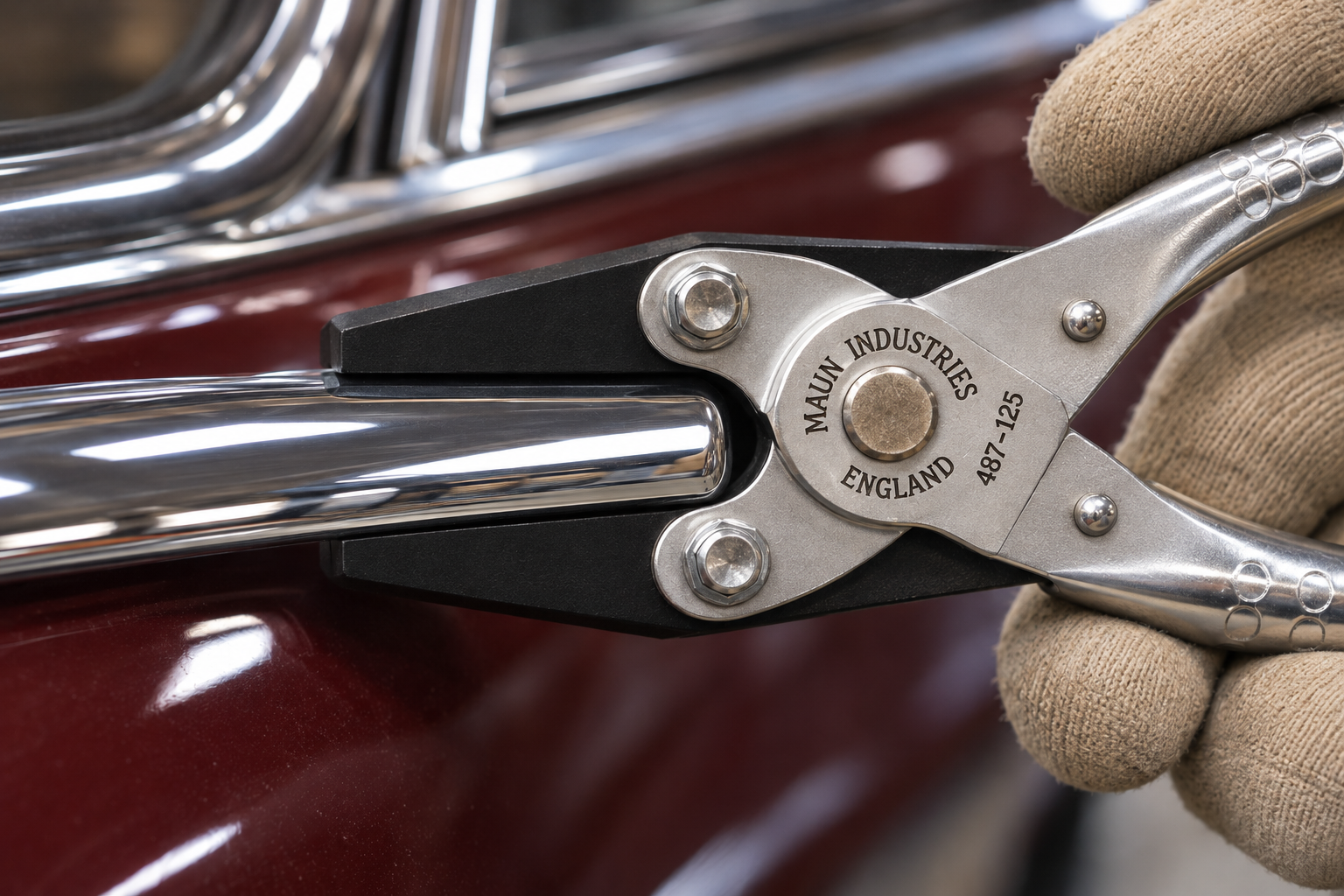
Whichever tool you use, the same steps reduce the risk of marking:
- Clean the part and the jaws. Wipe both with a clean, lint-free cloth. Grit, swarf and polishing compound often cause more scratches on polished work than the jaw itself.
- Choose the tool for the finish and the force. Use the comparison above. If you're unsure, start with the softer option and only move to smooth steel jaws, where suitable for the finish, if the part slips.
- Grip on flats where you can. Set the jaws on two flat, parallel faces of the part, such as the flats of a hexagon or the sides of a strip, so more of the jaw face is in contact.
- Put the part well into the jaws. With parallel jaws, the more of the jaw face that touches the part, the more evenly the pressure is spread.
- Squeeze only as hard as the job needs. On plastic inserts, extra force only compresses the insert.
- Check the part before you carry on. Look at the finish under good light after the first grip. If you see any mark, stop and change to a softer jaw.
FAQs
Will nylon jaw pliers mark gold or silver?
Nylon and soft plastic jaws reduce the risk of marking gold, silver and plated wire, because no metal touches the work. They don't guarantee a mark-free result: grit, too much pressure or a delicate finish can still leave a mark, so keep the jaws clean and grip gently.
Can I wrap tape round my pliers to stop them marking?
Tape over steel jaws is a stopgap at best. It slips, it can tear and expose the jaw mid-grip, and it can leave adhesive on the part. Plastic or smooth jaws are a more reliable way to reduce the risk of marking.
Are slip-on jaw covers as good as pliers with plastic or nylon jaws?
They reduce the risk of tooth marks, but the cover can shift, and on ordinary pliers the jaws still close at an angle, so pressure is concentrated at a single point as the jaws close. For regular work on finished parts, parallel pliers with plastic jaws give a more controlled hold.
Why do smooth pliers still mark plated wire?
A steel jaw is harder than the plating, so even without teeth it can burnish a bright line where the jaws closed. On plated, coloured or enamelled wire, use plastic or nylon jaws to reduce the risk.
Are Parallel Pliers Hard to Use and Do They Slow You Down?
About the author
Rebekah Jackson is Digital Marketing Executive at Maun Industries, the family-owned toolmaker that has made pliers and hand tools in Nottinghamshire, England, since 1944. She joined Maun in 2015 and has worked across all aspects of the business since, including assembling tools in the factory, which is why her guides start from the jobs people use Maun tools for. She writes Maun's knowledge-base guides, with every specification checked against Maun's published product data.
Published: 27.11.26 · Last updated: 27.11.26