


Combination Parallel Pliers vs Standard Combination Pliers
13th May 2026
A standard combination plier sits in nearly every toolbox.
It grips, it bends, it cuts wire and, for most tasks, it does a fair job.
But spend a long first-fix day using a standard combination plier, but after a long first-fix day with standard combination pliers, or after cutting a hundred wires, you quickly start to see their limitations.
In this article, we’ll introduce you to Combination Parallel Pliers and how they compare to standard versions, including the jaw mechanics and cutting capacity.
Key Differences By Feature
Jaw Mechanics: Scissor-Action vs Parallel-Action
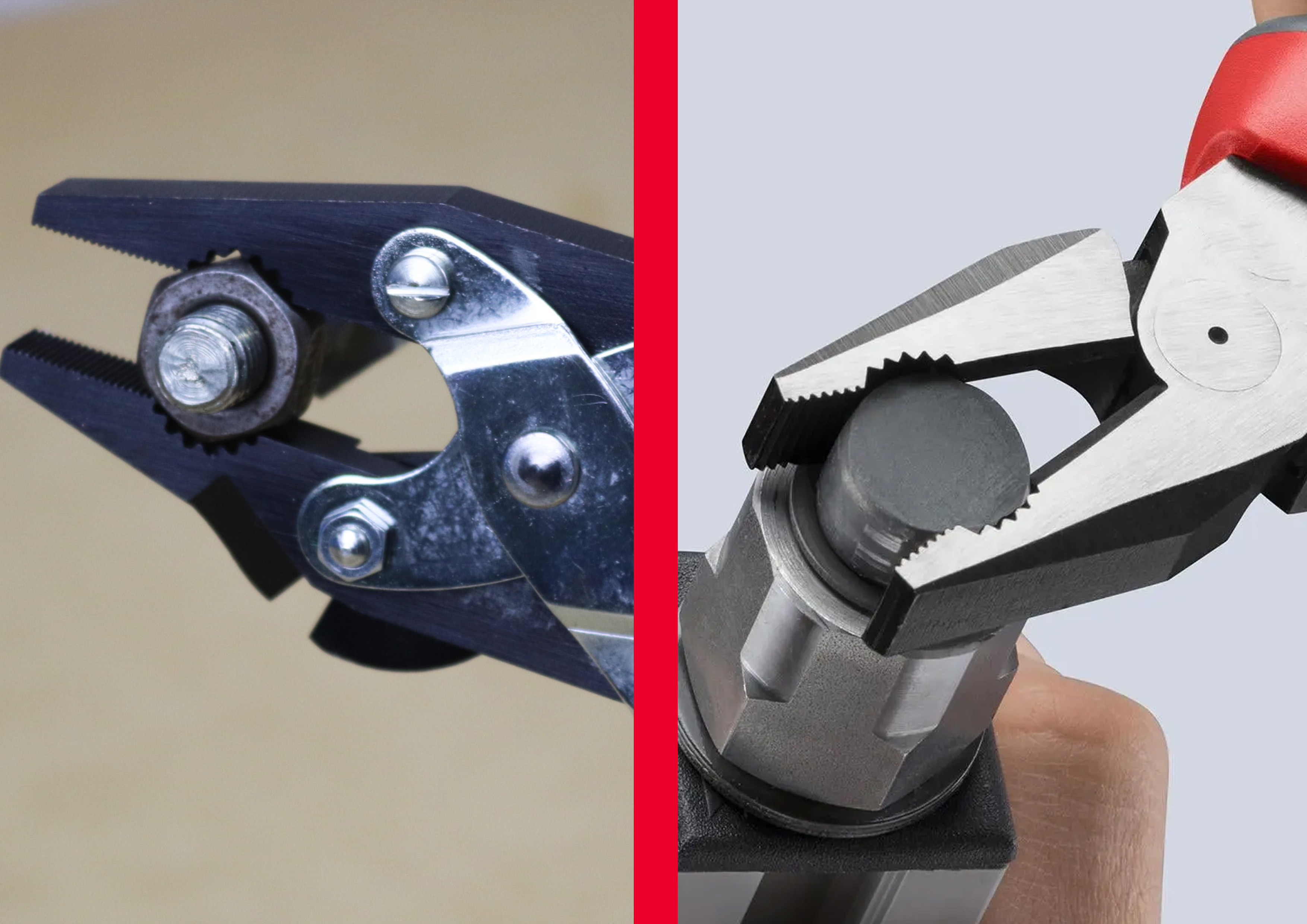
A standard combination plier uses a scissor-action pivot, which means the jaws rotate around a single rivet, and so the grip strength is highest at the rivet end and weakest at the tip. That's a problem when you're trying to hold something tightly (like a hex bolt) at the front of the jaw. The strongest part of the grip is in the part of the jaw you probably use the least.
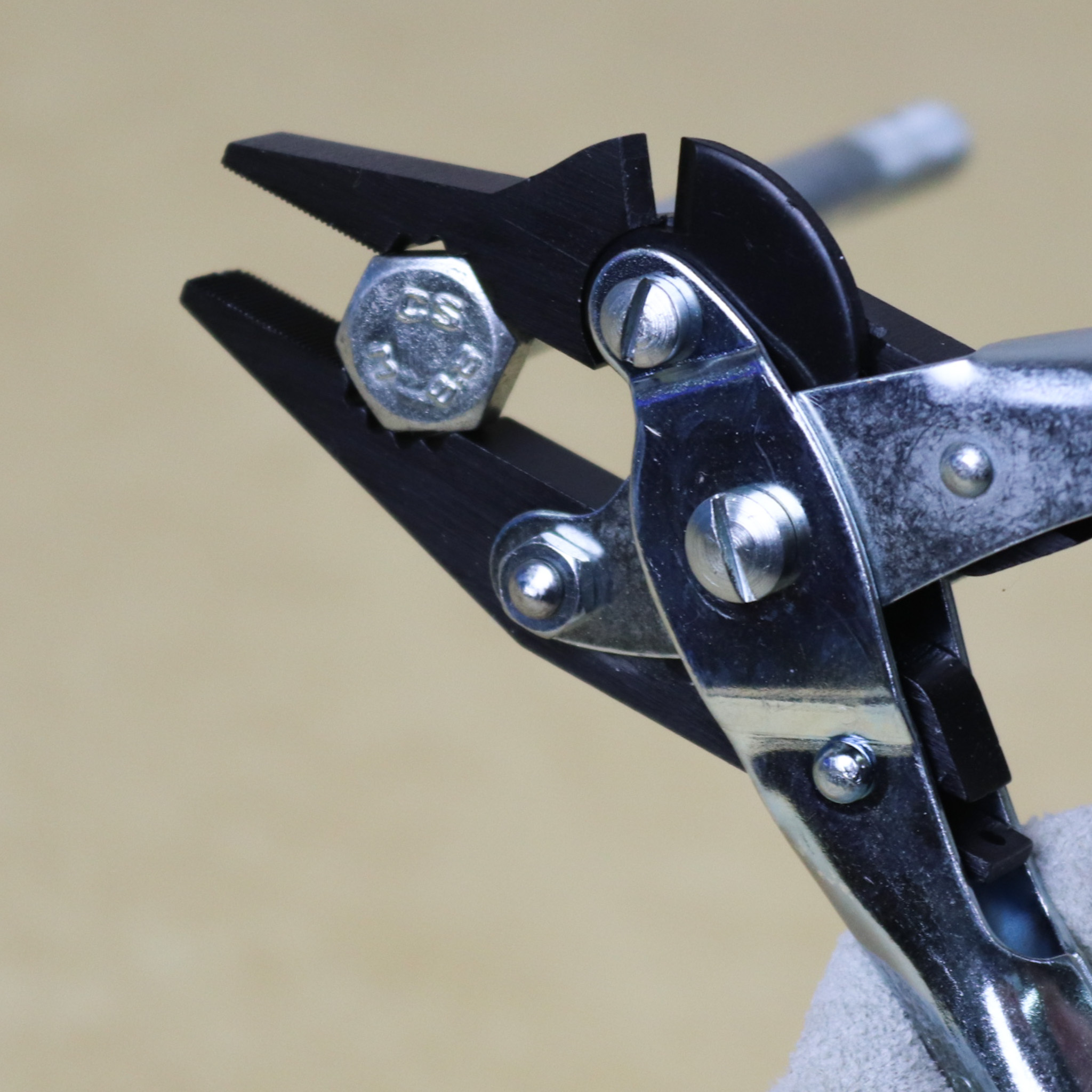
Now compare that to Combination Parallel Pliers, where the jaws close in parallel through a compound box joint. The flat jaw edges stay flat through the full grip range, and so your full grip strength is applied evenly across your workpiece, leading to more accurate and reliable grip and manipulation. There are no pinch points along the jaw and no force concentration where you don't want it, so you can work more accurately.
Bottom line: if you regularly grip flat fastenings or soft wire that scuffs under uneven pressure, the parallel-action mechanics save you a re-grip every time.
We've also written a longer explainer on the parallel-action mechanism if you want the full engineering walk-through.
Cutting Capacity: Single Pivot vs Compound Lever
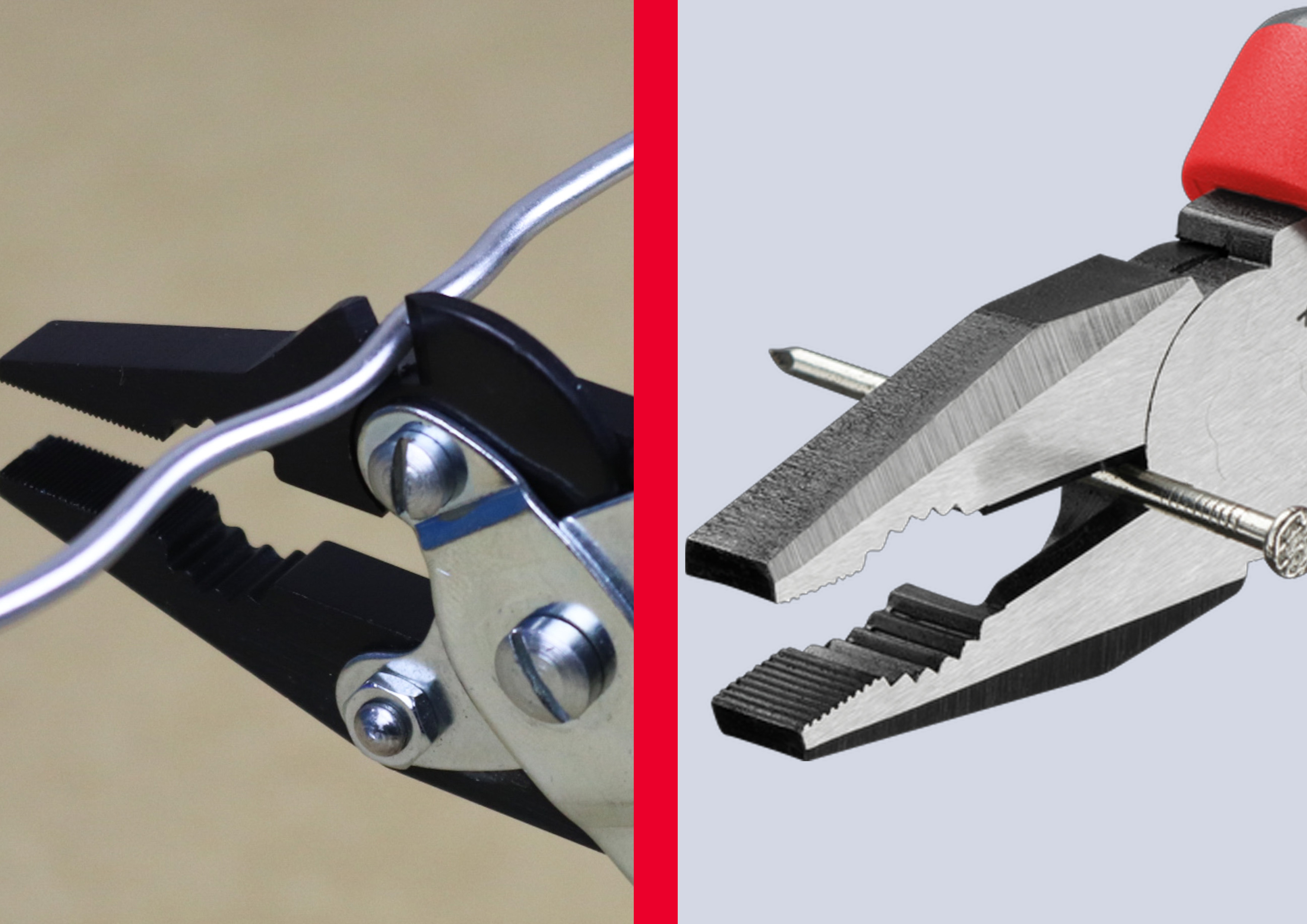
A standard combination plier has its cutter at the back of the jaw, near the pivot. That's the strongest point on a single-pivot tool, but you're still working against a 1st-class lever, which means your cutting capacity is only as strong as your grip. Cut a 2.0 mm piano wire with one, and you'll feel it in your palm. By the 6th cut, you’ll be reaching for other options.
In contrast, the Combination Parallel Plier uses a compound-lever action and has its cutter on the outside of the tool. This mechanism multiplies your hand force by 25x on the 150 mm version and 23x on the 180 mm version, meaning you can cut harder materials with less effort. The cutting edges are case-hardened to HRC 57, improving the longevity of the tool.
With side-mounted cutters, the jaw face remains fully usable for gripping, unlike back-of-jaw designs where the cutting blades can take up to a third of the jaw length.
Bottom line: if you're making more than a handful of cuts in a session or cutting hard wire, the compound-lever cutter is what saves your grip strength for the next job.
Gripping Contact Point
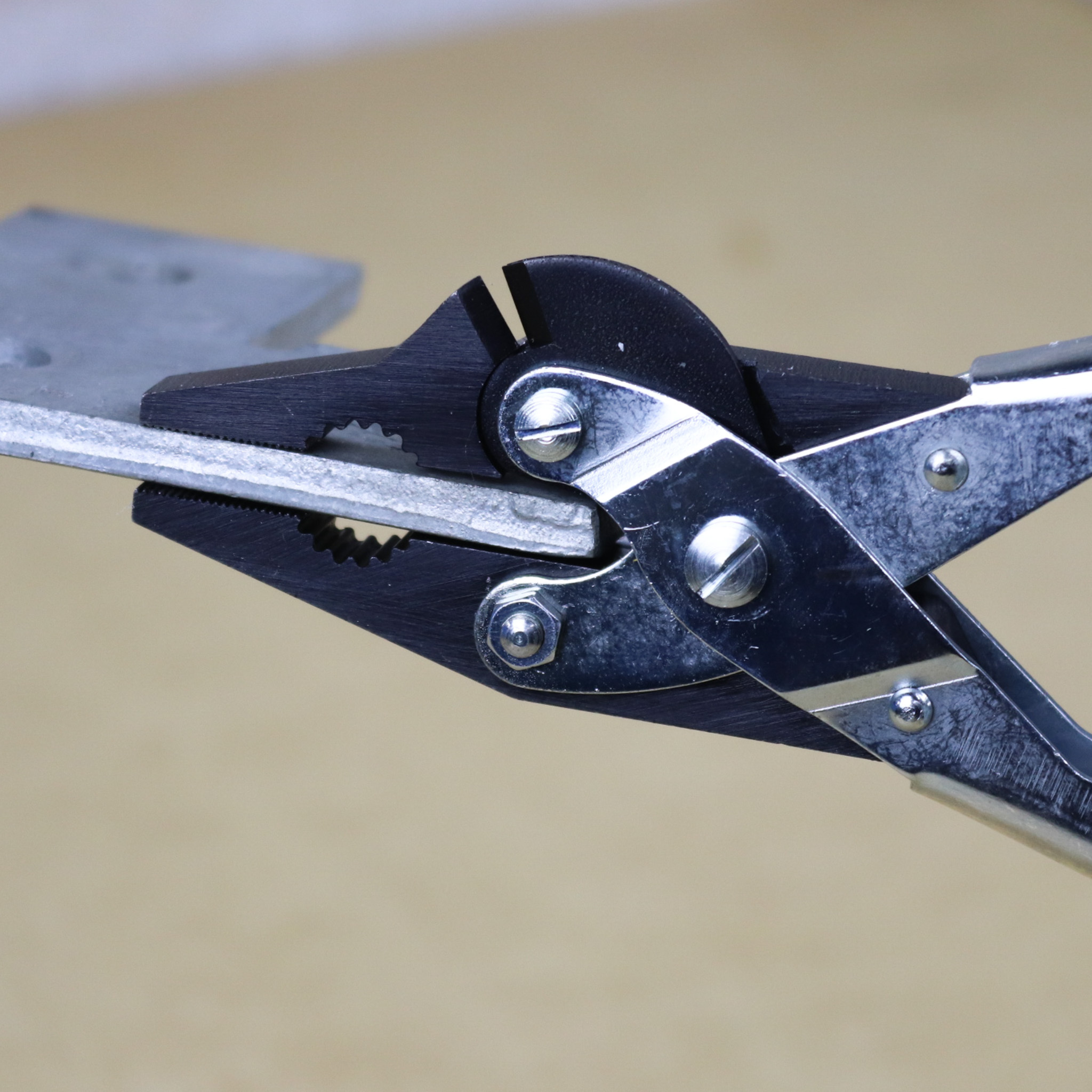
A standard combination plier divides its jaws into roughly three sections:
- A flat part at the front
- An oval pipe grip in the middle
- A cutting edge at the back.
Each section is short, and represents roughly 1/3 of the total jaw length, so for tough gripping, you only have a small section of grip to work with. However, for moving quickly between gripping and cutting, it is the best option.
The Combination Parallel Plier has the cutter to the side instead, which means the flat grip and pipe grip parts can be larger, improving your grip.
Then, for even more grip, there’s the Side Cutter Parallel Plier. This doesn’t have a pipe grip at all, meaning the entire jaw length can be in contact with your workpiece, significantly increasing your grip. It also has a v-slot in the jaws that feeds and holds wire, cable, stud or rod along the full jaw length for vastly improved grip. The open throat allows you to work at any point along the full length of a wire too.
Bottom line: If you want a lightweight tool for simple gripping and cutting, the standard tool is fine. For jobs where you need better grip or higher cutting capacity, choose a Combination Parallel Plier or Side Cutter Parallel Plier.
Hand Fatigue Across A Day
Hand fatigue is something that creeps up on you, but can leave you halfway through a project unable to complete it without experiencing undue pain.
Squeeze a standard combination plier through fifty cuts and a hundred grips, and the small muscles in your hand and forearm will tire out more quickly and likely hurt the day after.
The HSE reported 511,000 UK workers suffering from a work-related musculoskeletal disorder in 2024/25. UK workers lost 40.1 million working days to work-related illness and workplace injury that year. Not all of those are tool-related, but stack that with the arthritis rate in the UK, and you can infer that there’s a meaningful number of people who’d benefit from tools that are easier to use.
The Combination Parallel Plier with return-spring (4991) opens the jaws for you between squeezes. Together with its compound-lever cutter (which requires less hand force), the tool takes a lot of the stress off your hand when used repeatedly to grip and cut (particularly on long tasks).
Bottom line: For long tasks, a return spring will measurably increase the work you can do without your hand getting fatigued.
When Each Plier Wins
Choose the Combination Parallel Plier if you:
- Work first-fix or second-fix plumbing or heating and routinely grip pipe, conduit and threaded fittings alongside wire.
- Work on automotive maintenance involving hose clamps, brake-line nuts and small-diameter tube alongside electrical loom work.
- Carry one combination plier in a tight tool roll and need it to handle flats, cylindrical work and cutting in the same shift.
- Want the integrated pipe grip without giving up the parallel-action grip and compound-lever cutter.
Choose a standard combination plier if you:
- Use combination pliers occasionally for household DIY where the lowest cost matters more than fatigue or precision.
- Work with familiar scissor-action geometry and do not need to upgrade.
Look at the Side Cutter Parallel Plier instead if you:
- Spend the day on wire and cable work and want the v-slot to feed and hold wire along the jaw length.
- Work with live electrical circuits and need a 1000V insulated tool to IEC 60900:2018.
- Cut harder or thicker piano wire and need the HRC 62-65 cutting edges and 2.5 mm piano wire cutting capacity of the 200 mm size.
- Work soft metals or jewellery wire that the smooth-jaw variant won't mark.
- Need the autoclave-safe variant for sterilisation environments.
You can browse all Maun Combination Pliers here.
FAQs
Do combination parallel pliers need more maintenance than standard pliers?
With a compound box joint and multiple pivot points, there are a few more moving parts than your standard single-rivet plier.
However, maintenance is still incredibly straightforward. Just wipe the jaws clean after a dusty job and apply a drop of light machine oil to the joints every few months. This keeps the parallel mechanism smooth and ensures the compound-lever cutter remains effortless to engage.
Does the side-mounted cutter get in the way when working in tight spaces?
It’s a common concern when moving away from a back-of-jaw cutter, but the side cutter is designed to stay highly compact against the tool's profile.
While the head of a parallel plier is slightly wider than a standard scissor-action tool, you actually need less handle clearance to open and operate the jaws. Because the jaws move in parallel, you don't have to open the handles extremely wide to grip larger objects, making them highly effective in confined areas.
Are these pliers suitable for left-handed users?
Absolutely. While the cutter is mounted on one side of the jaw face, the tool itself is fully symmetrical in its handle design and compound action.
Left-handed users simply flip the tool over to achieve the exact same cutting leverage, grip strength, and clear line of sight to the workpiece.
Are combination parallel pliers noticeably heavier in the tool belt?
The extra steel required to engineer the compound box joint and the heavy-duty side cutter does add a marginal amount of weight compared to a basic standard plier of the same length. However, most tradespeople find that this weight is instantly offset.
Because the cutting capacity and grip are so high, you can often leave your dedicated heavy-duty side cutters and separate grips in the van, actually lightening your everyday carry.
Conclusion
That's our comparison of the Combination Parallel Pliers vs standard designs, including how parallel-action jaws and an integrated pipe grip change what one tool can handle.
If you have any feedback or improvements you'd recommend for this post, we'd love to hear from you.
This post was brought to you by Maun, experts in tools since 1944.
Scroll back up to re-read any key points, browse our related pages below or contact us with any questions: